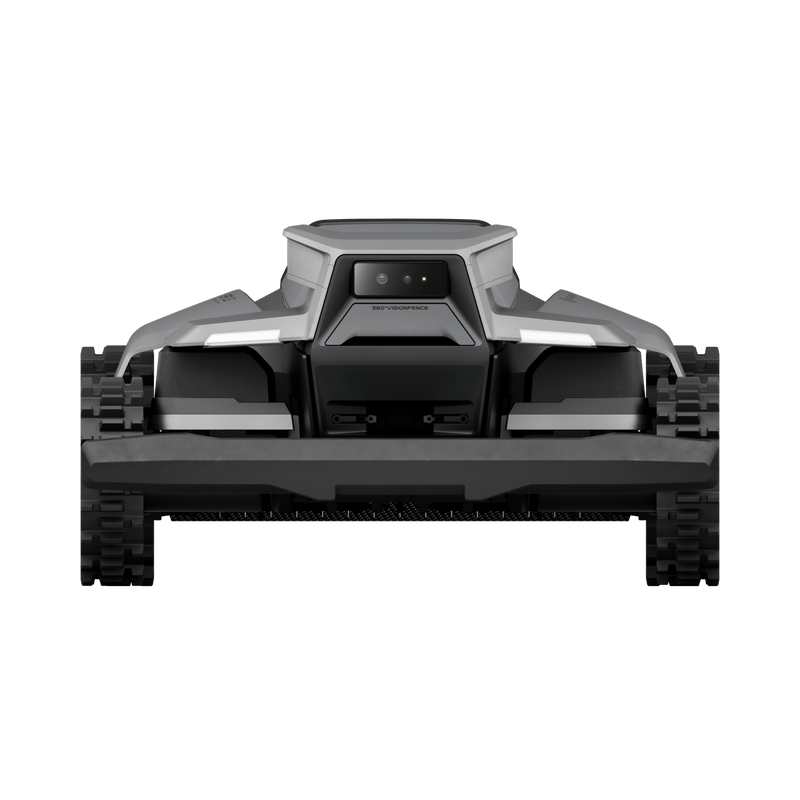
Vision-Based Robot Mowers Explained
Cameras that recognise the lawn edge and the hedgehog on it. What visual navigation does well, and what light does to it.
Vision-based navigation is the approach that most resembles how a person mows: look at the garden, recognise where the grass ends, notice what is in the way, and steer accordingly.
How it works
One or more cameras feed images to software trained to recognise what it is seeing — the texture and colour of cut and uncut grass, the line where lawn meets path or bed, and objects that should not be driven over.
Some systems also use two cameras to judge depth from the difference between the images, in much the same way two eyes do.
What vision does uniquely well
It recognises categories, not just obstructions. Other sensors detect that something is there. A vision system can distinguish a hedgehog from a plant pot from a garden hose — and treat them differently. Stopping for wildlife is a genuine benefit that only vision provides.
It reads the lawn edge directly. Where the grass ends is visible information. A vision system can follow the actual edge rather than a mapped line, which means it adapts as beds grow.
It sees cut and uncut grass. Recognising which areas have already been mowed lets the mower track its own coverage visually.
Where vision struggles
Light. This is the fundamental constraint. Dawn and dusk, deep shade, dappled sunlight under trees, and bright low sun all make recognition harder. A system reliable at midday can be less so at seven in the evening.
Weather. Rain on the lens, fog, and heavy drizzle all degrade image quality. Most mowers avoid heavy rain regardless.
Dirt. A muddy or cobwebbed lens is a blind mower. Cleaning the camera becomes part of routine maintenance in a way that is unfamiliar to owners of older machines.
Unusual gardens. Recognition software is trained on typical lawns. An unusual grass type, an artificial lawn, or a heavily moss-covered surface may be read less reliably.
Darkness. Unlike LiDAR, most vision systems cannot work in the dark without illumination, which limits night mowing.
Vision combined with other systems
Vision is most often found alongside satellite positioning or LiDAR rather than alone, and the reasoning is sound: RTK provides accurate absolute position, vision provides rich understanding of what is nearby, and each covers the other's weakness.
A practical arrangement is satellite positioning for the mowing pattern, with vision watching continuously for obstacles and wildlife.
Privacy
A camera in the garden raises a reasonable question. Manufacturers generally state that images are processed on the machine and not uploaded, but this is worth confirming for any model you are considering, particularly if the garden is overlooked or shared.
Who vision suits
Vision is a good fit for gardens with pets, children or wildlife, where recognising what an obstacle actually is genuinely matters, and for gardens with soft or changing boundaries rather than hard walls.
Be more cautious about relying on vision alone in a deeply shaded garden, or if you specifically want the mower to work at night.